JavaScript DevelopmentSep 21, 2026
Modernizing Legacy JavaScript Applications: A Practical Guide
Practical strategies for modernizing legacy JavaScript applications. Learn step-by-step refactoring, framework updates, and architectural improvements.
Hire
Hire by role
Hire Front-end developers
Hire Back-end developers
Hire Full-stack developers
Hire Android developers
Hire iOS developers
Hire Mobile developers
Hire AI engineers
Hire by skill
Hire JavaScript developers
Hire React Native developers
Hire React.js developers
Hire .NET developers
Hire TypeScript developers
Hire Flutter developers
Hire Golang developers
Hire by country
Devs in Ukraine
Expirienced engineers with strong product focus and fast integration.
Devs in Poland
EU-based developers with reliable delivery and high standards.
Devs in Argentina
Senior engineers with strong technical depth and timezone alignment.

Summarize with:

Leave your email and we will inform you about all our news and updates
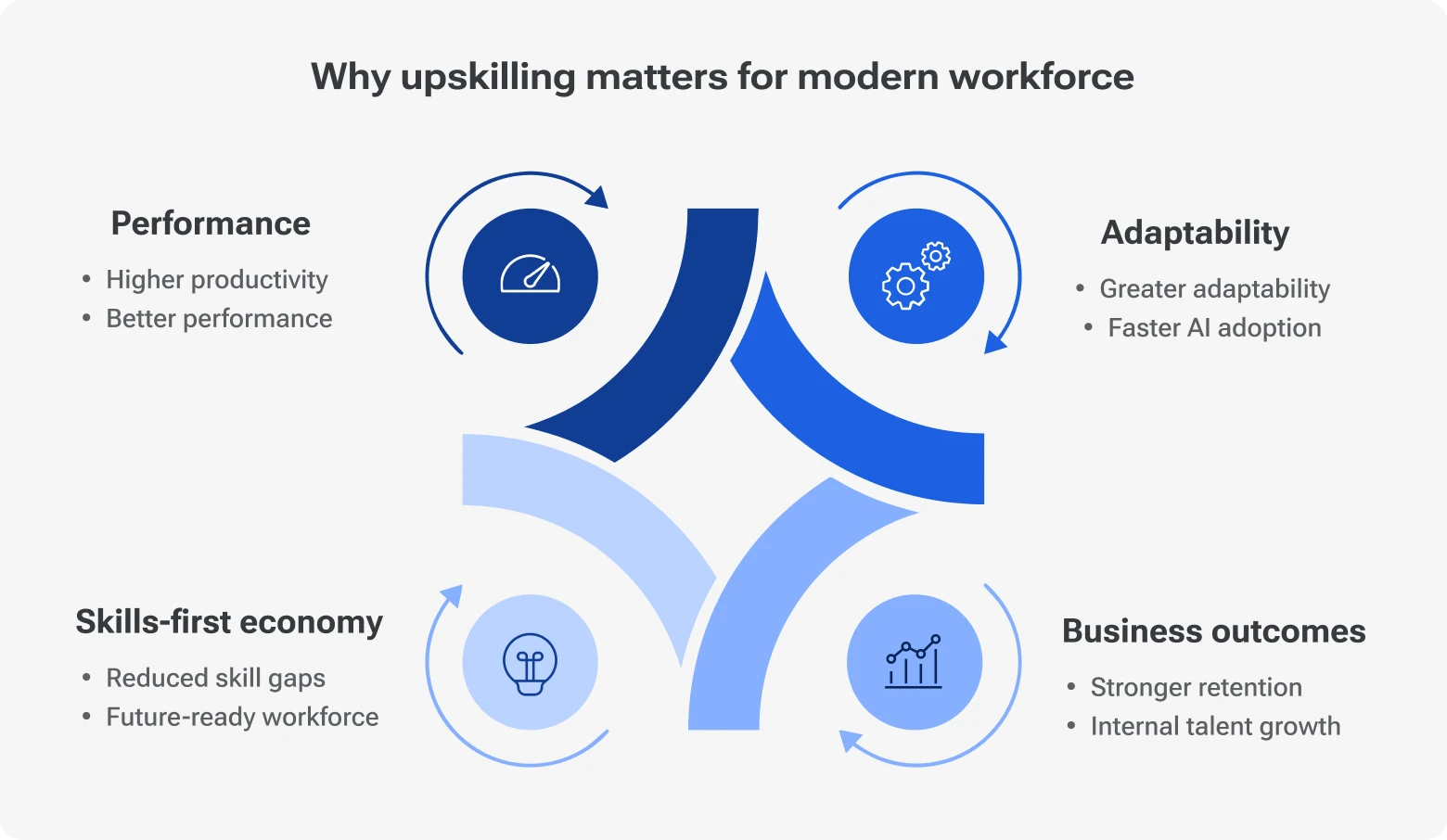
AI hasn't created new ways to build engineering teams. Just as before, companies have three options: develop people they already have, hire new talent, or bring in external experts. What AI has changed is the balance between them. That's because it has reshaped the skills engineering teams need, the talent available on the market, and the return each approach can deliver.
Read on to learn how to build an engineering team in the AI era, what upskilling, hiring, and augmenting are good and bad at, and how to blend them based on your goals, timeline, existing capacity, and budget.
test g, hiring, and staff augmentation. However, before AI, h
g, hiring, and staff augmentation. However, before AI, h
For years, engineering leaders have used upskilling, hiring, and staff augmentation. However, before AI, hiring was often the default way to grow an eng
Also, AI has made hiring more difficult. Nearly two-thirds of managers (65%) said hiring has become harder due to the flood of AI-generated applications, and 58% reported greater difficulty identifying really competent candidates compared to one year ago.
As AI tools enable job seekers to create highly polished CVs, applications, and test assignments, employers spend more time validating qualifications, which slows down the hiring process and increases the risk of misalignment.
Also, AI has made hiring more difficult. Nearly two-thirds of managers (65%) said hiring has become harder due to the flood of AI-generated applications, and 58% reported greater difficulty identifying really competent candidates compared to one year ago.
As AI tools enable job seekers to create highly polished CVs, applications, and test assignments, employers spend more time validating qualifications, which slows down the hiring process and increases the risk of misalignment.
Opt for upskilling when:
There is a need to build a strategically important capability.
You already have engineers with the potential to grow into the role.
Your team has enough senior capacity to mentor and review others.
Preserving institutional knowledge is more valuable than bringing in external experience.
Upskilling alone isn't suitable when:
Upskilling alone isn't suitable when:
The capability is needed immediately.
The capability is needed immediately.
The capability is needed immediately.
The capability is needed immediately.
The capability is needed immediately.
The capability is needed immediately.
The capability is needed immediately.
The capability is needed immediately.
As AI tools enable job seekers to create highly polished CVs, applications, and test assignments, employers spend more time validating qualifications, which slows down the hiring process and increases the risk of misalignment.
As AI tools enable job seekers to create highly polished CVs, applications, and test assignments, employers spend more time validating qualifications, which slows down the hiring process and increases the risk of misalignment.
As AI tools enable job seekers to create highly polished CVs, applications, and test assignments, employers spend more time validating qualifications, which slows down the hiring process and increases the risk of misalignment.
As AI tools enable job seekers to create highly polished CVs, applications, and test assignments, employers spend more time validating qualifications, which slows down the hiring process and increases the risk of misalignment.
As AI tools enable job seekers to create highly polished CVs, applications, and test assignments, employers spend more time validating qualifications, which slows down the hiring process and increases the risk of misalignment.
As AI tools enable job seekers to create highly polished CVs, applications, and test assignments, employers spend more time validating qualifications, which slows down the hiring process and increases the risk of misalignment.
As AI tools enable job seekers to create highly polished CVs, applications, and test assignments, employers spend more time validating qualifications, which slows down the hiring process and increases the risk of misalignment.
As AI tools enable job seekers to create highly polished CVs, applications, and test assignments, employers spend more time validating qualifications, which slows down the hiring process and increases the risk of misalignment.
As AI tools enable job seekers to create highly polished CVs, applications, and test assignments, employers spend more time validating qualifications, which slows down the hiring process and increases the risk of misalignment.
As AI tools enable job seekers to create highly polished CVs, applications, and test assignments, employers spend more time validating qualifications, which slows down the hiring process and increases the risk of misalignment.
As AI tools enable job seekers to create highly polished CVs, applications, and test assignments, employers spend more time validating qualifications, which slows down the hiring process and increases the risk of misalignment.
As AI tools enable job seekers to create highly polished CVs, applications, and test assignments, employers spend more time validating qualifications, which slows down the hiring process and increases the risk of misalignment.
As AI tools enable job seekers to create highly polished CVs, applications, and test assignments, employers spend more time validating qualifications, which slows down the hiring process and increases the risk of misalignment.
As AI tools enable job seekers to create highly polished CVs, applications, and test assignments, employers spend more time validating qualifications, which slows down the hiring process and increases the risk of misalignment.
As AI tools enable job seekers to create highly polished CVs, applications, and test assignments, employers spend more time validating qualifications, which slows down the hiring process and increases the risk of misalignment.
As AI tools enable job seekers to create highly polished CVs, applications, and test assignments, employers spend more time validating qualifications, which slows down the hiring process and increases the risk of misalignment.
As AI tools enable job seekers to create highly polished CVs, applications, and test assignments, employers spend more time validating qualifications, which slows down the hiring process and increases the risk of misalignment.
As AI tools enable job seekers to create highly polished CVs, applications, and test assignments, employers spend more time validating qualifications, which slows down the hiring process and increases the risk of misalignment.
As AI tools enable job seekers to create highly polished CVs, applications, and test assignments, employers spend more time validating qualifications, which slows down the hiring process and increases the risk of misalignment.
As AI tools enable job seekers to create highly polished CVs, applications, and test assignments, employers spend more time validating qualifications, which slows down the hiring process and increases the risk of misalignment.
As AI tools enable job seekers to create highly polished CVs, applications, and test assignments, employers spend more time validating qualifications, which slows down the hiring process and increases the risk of misalignment.
As AI tools enable job seekers to create highly polished CVs, applications, and test assignments, employers spend more time validating qualifications, which slows down the hiring process and increases the risk of misalignment.
As AI tools enable job seekers to create highly polished CVs, applications, and test assignments, employers spend more time validating qualifications, which slows down the hiring process and increases the risk of misalignment.
As AI tools enable job seekers to create highly polished CVs, applications, and test assignments, employers spend more time validating qualifications, which slows down the hiring process and increases the risk of misalignment.
As AI tools enable job seekers to create highly polished CVs, applications, and test assignments, employers spend more time validating qualifications, which slows down the hiring process and increases the risk of misalignment.
As AI tools enable job seekers to create highly polished CVs, applications, and test assignments, employers spend more time validating qualifications, which slows down the hiring process and increases the risk of misalignment.
As AI tools enable job seekers to create highly polished CVs, applications, and test assignments, employers spend more time validating qualifications, which slows down the hiring process and increases the risk of misalignment.
As AI tools enable job seekers to create highly polished CVs, applications, and test assignments, employers spend more time validating qualifications, which slows down the hiring process and increases the risk of misalignment.
As AI tools enable job seekers to create highly polished CVs, applications, and test assignments, employers spend more time validating qualifications, which slows down the hiring process and increases the risk of misalignment.
As AI tools enable job seekers to create highly polished CVs, applications, and test assignments, employers spend more time validating qualifications, which slows down the hiring process and increases the risk of misalignment.
As AI tools enable job seekers to create highly polished CVs, applications, and test assignments, employers spend more time validating qualifications, which slows down the hiring process and increases the risk of misalignment.
As AI tools enable job seekers to create highly polished CVs, applications, and test assignments, employers spend more time validating qualifications, which slows down the hiring process and increases the risk of misalignment.
As AI tools enable job seekers to create highly polished CVs, applications, and test assignments, employers spend more time validating qualifications, which slows down the hiring process and increases the risk of misalignment.
As AI tools enable job seekers to create highly polished CVs, applications, and test assignments, employers spend more time validating qualifications, which slows down the hiring process and increases the risk of misalignment.
As AI tools enable job seekers to create highly polished CVs, applications, and test assignments, employers spend more time validating qualifications, which slows down the hiring process and increases the risk of misalignment.
As AI tools enable job seekers to create highly polished CVs, applications, and test assignments, employers spend more time validating qualifications, which slows down the hiring process and increases the risk of misalignment.
Yes, if the vendor or its systems will create, receive, store, or transmit protected health information on your behalf, a BAA is required under HIPAA. The harder question is flow-down: the BAA has to extend to every sub-processor — cloud, logging, contractors — that touches PHI. A signed BAA with the vendor alone does not cover the chain behind it.
Look for audited attestations that map to your need: SOC 2 Type II for security controls over time, ISO 27001 for information security management, and ISO 13485 where a medical device quality system is relevant. None of these proves project-level V&V evidence is complete. There is no HIPAA or IEC 62304 certificate — those are conformance demonstrated through evidence, not a logo.
IEC 62304 is the recognized international standard for medical device software lifecycle processes. It assigns software a safety class — A, B, or C — based on potential harm, and requires verification, validation, and traceability appropriate to that class. For QA, it sets the evidence bar: requirements linked to tests linked to risk controls, end to end. FDA and EU MDR regulators recognize it, though no body issues a formal certificate.
It depends on the gap. In-house QA keeps domain context and control close; embedded or outsourced QA adds regulated-healthcare depth and capacity faster than hiring. The wrong question is which is cheaper. The right one is which model gives QA real authority over your release and clear ownership of the validation evidence.
Pricing varies with engagement model, scope, regulatory burden, and the seniority and domain depth of the people on your account — there is no single rate. The more useful framing is total cost: weigh the engagement against the cost of a software-related medical device recall, a delayed submission, or a warning letter that validation evidence would have prevented.
Still have a question?
Talk to us